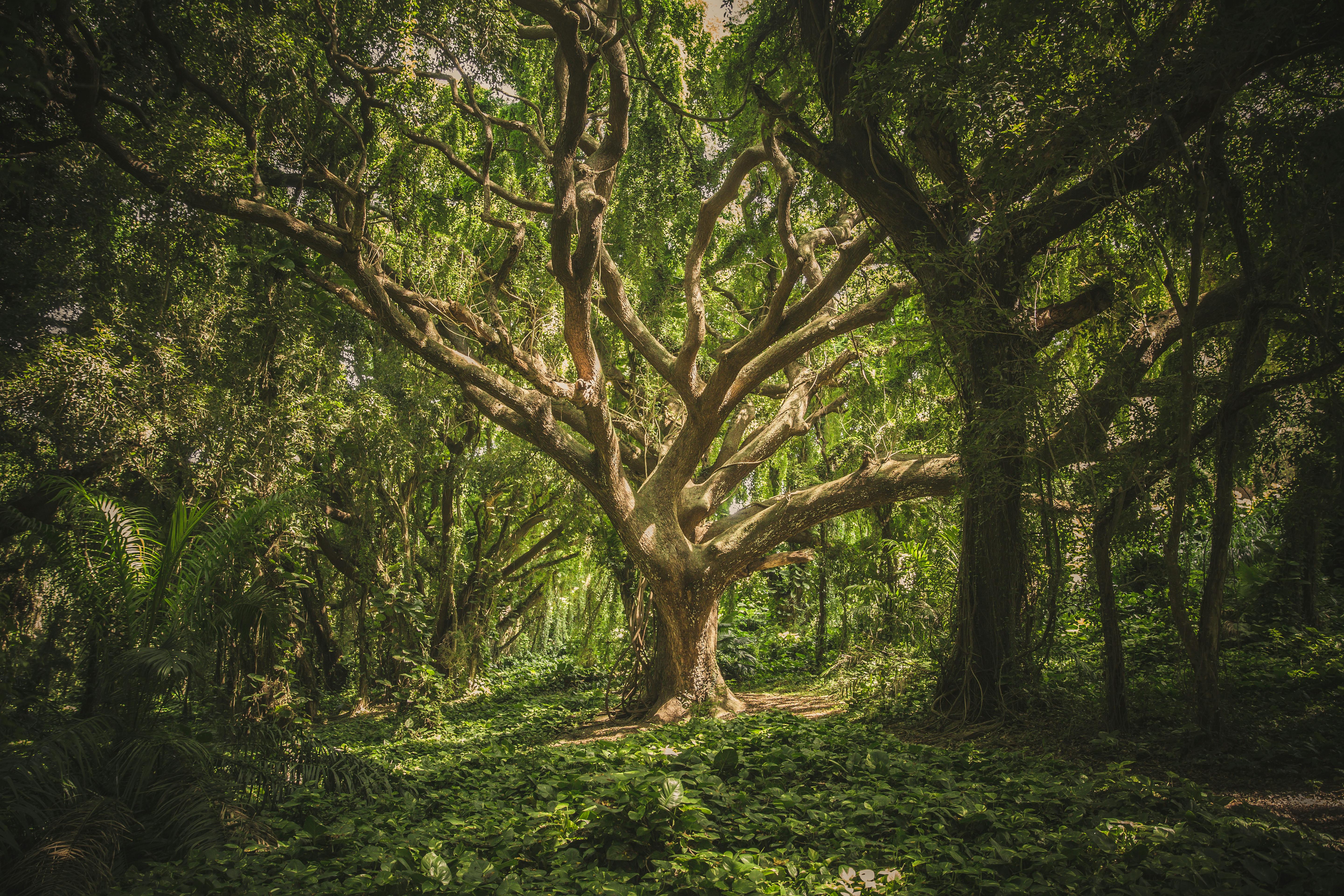
A story doesn’t lose its value just because it has a final period. Introducing a new series on the dignity of disappearing traditions.
I’m the youngest in my family—a position usually associated with being the “baby,” the one with the most “future” still stretched out before them. But as the older members of my family have begun to pass, that perspective has shifted. Lately, mortality hasn’t been a distant concept; it’s something that stares me dead in the face, and it has become increasingly difficult to look away.
Being the youngest has led me to a heavy, singular realization: the family name ends with me. When I look at my family tree—a sprawling map of names and dates—I realize I am the terminal branch. I am the end of the line. I am the final resting place of everything my ancestors survived to build.
I’m unable have children for reasons I don’t care to discuss on this platform, at least not at this time. My path to parenthood is closed. It’s a reality that has been more heartbreaking than I have ever cared to admit, even to myself. As I struggle to make my peace with this, I am haunted by a lingering question of legacy: What happens to the stories, the traditions, and the work of those who came before us when there’s no one left to receive them?
On both sides of my family, I have become the accidental archivist. I’m the unofficial keeper of our collective history; birth certificates, wedding licenses, the yellowed photographs, and the oral histories of a lineage that survived wars, migrations, and incredible hardships. For years, my family has entrusted me with these treasures, perhaps sensing my inherent love for history. But now, that trust feels like a weight and now I feel like I’m just this bridge to nowhere.
It’s a strange and lonely feeling. My father’s side of the family is massive, yet through a series of twists in fate—cousins who never married, or branches that produced only daughters who took other names—I am the last to carry our name. I have one male cousin who adopted a son and while he will carry the name, he isn’t blood. In no way to do I want to minimize that because he is loved and part of the family and his journey will likely carry it’s own burdon when the realization hits. But in terms of bloodlines, I am the “last known survivor” of a specific identity.
It’s a feeling I can only describe as terrifyingly solitary. As someone who deeply loves family and tradition, it saddens me more than I ever imagined it could.
I find myself overwhelmed by the thought that when I go, the nuances of my people go with me. No one will know how funny and wise my grandfather was; no one will remember the specific brand of strength my mother possessed or the quiet brilliance of my father or the resilience of my grandmothers.
Sometimes, I regret to admit, I resent the position I was put in. I feel this quick yet acknowledged anger—at my own body, at the choices of my relatives, at the unfairness of being the one left to turn out the lights. My family members will have the comfort of me being there until their last breath, but who will I have to talk to when my turn comes? It’s all selfish, I know. And I’ve gotten over it for the most part.
As scary as it sounds to be left behind, I wouldn’t wish it for any of my family members. I can handle it. I will be there for them when they pass, and I’m okay with this. I’m looking at it as an honor. I got to be there to know them, and be brought up by amazing humans who loved me. And I get to be there when they leave this world to wait for me on the other side.
Despite my realization, I’ve been searching for a way to transform this grief into a purpose. In the process of starting this Substack, I found myself struggling to find a “niche.” I knew I loved history, rituals, traditions and the curation of beautiful things within an “Atelier” setting. Then I realized: I am not alone in this position.
The “Terminal Branches” of Humanity
Terminal branches are everywhere. They’re the traditions reaching their natural conclusion because the modern world has moved on. They’re the art and trades with no apprentices, the ancient languages with only one surviving speaker, and the rituals that have no “next” person to carry on with them. While it isn’t always a tragedy, it is always a profound loss.
With that said, I’ve decided to carve out a dedicated space here to document these “closing chapters.” If I’m to be the last of my line, I want to spend that time being a faithful witness to others who find themselves at a similar crossroads.
I’d like to feature a series of deep dives into these disappearing worlds. Highlight the family and profile the individual stories of those who stay with a craft even when they’re the last ones left. Record the secrets of traditional artistic trades before the knowledge evaporates. And archive the vocabulary of ways of life that are slipping through our fingers.
This isn’t an attempt to save the world or stop the clock. It is simply an archive. Maybe it’s a form of therapy for me but either way, I want to sit in these “final rooms,” listen to the stories, and record them as clearly as I can. I hope someone might find these stories interesting—not because they’re sad, but because they’re human, and they deserve to be told one last time.
Maybe I am not a dead end after all. Maybe I am a Keeper.
We live in a culture with diminishing traditions, obsessed with the “New” and the “Next,” and taught that growth is the only metric of success. But I believe there is a holy dignity in the things that are finishing. A story doesn’t lose its value just because it has reached its final period. If I am the last of my name, I want that name to stand for the preservation of yours. I am documenting these terminal branches so that even when the lights go out in the atelier, the memory of the fire remains. I hope you’ll join in.
Whether you have a story of a disappearing tradition, a question about lineage, or simply want to share a reflection on being a “Keeper” in your own right, I would love to hear from you.
Ways to Connect:
- Share a Story: Are you the last of a line? Do you know a craft that is losing its next generation? Tell me about the “terminal branches” in your world.
- Collaborations: I am looking to profile artisans, historians, and archivists. If you are working to keep a fire burning, let’s talk.
- General Inquiries: For questions regarding my research, my writing, or the curated collections within the Atelier. Please find my substack HERE.
Designed with WordPress






Leave a Reply