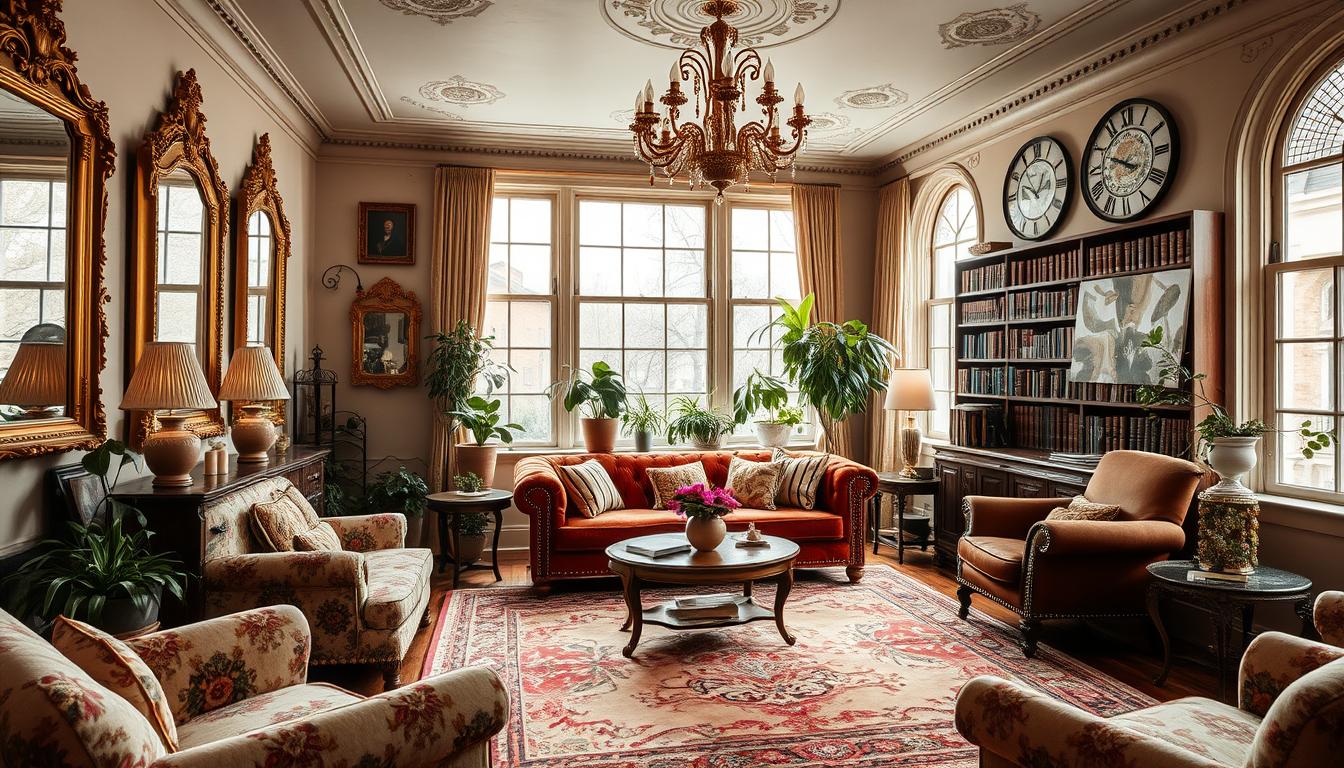
Are you tired of sterile, perfect spaces? I certainly am. That’s why I’m so excited about the biggest design movement taking over our homes this year.
This isn’t just another passing trend. According to Pinterest, searches for “vintage maximalism” exploded by 260% recently. People are craving spaces that feel like home, not a catalog.
This interior style celebrates personal history through curated collections. It’s about mixing eras and patterns to create a space that tells your unique story. Every piece has meaning, creating warmth and character.
I love how this approach rejects cold minimalism. Instead, it embraces intentional layering and organic motifs. The result is a cozy yet dramatic space that reflects your personality perfectly.
Key Takeaways
- Vintage maximalism is 2025’s hottest home decor trend, with search interest growing massively
- This style combines different time periods and patterns for a personalized look
- It focuses on intentional curation rather than random clutter
- The aesthetic moves away from perfectionism toward warmth and character
- You can achieve this look by mixing sentimental items with modern elements
- The approach works for real budgets and focuses on sustainable updates
- Your space should tell your unique story through carefully chosen pieces
Why Vintage Maximalism is My Go-To Aesthetic for 2025
Have you ever walked into a room that instantly wrapped you in a warm hug? That’s the magic I find in this interior style. It’s not about following strict trends—it’s about curating a space that breathes life and tells your story.
I adore how this approach lets me blend different eras and patterns freely. There’s no rulebook. You mix what you love. The result? A home that feels like you—authentic, layered, and full of character.
Unlike stark minimalism, this decor philosophy embraces coziness and history. Rooms become inviting sanctuaries, not cold showrooms. Every piece has a past, adding depth and warmth to your daily life.
I’m also passionate about its sustainable heart. Instead of buying new, we cherish and repurpose. This reduces waste and supports local artisans. Your design choices make a positive impact.
This year, wellness takes center stage. A personalized environment can genuinely boost your mood. It creates a comforting sense of belonging. Your surroundings should nurture you.
TikTok’s “intentional clutter” movement proves this isn’t just my opinion. People are clustering beloved items to craft lived-in spaces. It’s about curated collections, not chaos.
What I love most is the flexibility. Start with a few special pieces. Build over time. There’s no rush. Your aesthetic evolves as you do.
This look is perfect for real life. It hides flaws and celebrates well-loved treasures. Your home becomes a gallery of memories, not a stage for perfection.
Ultimately, it’s my favorite because it turns a house into a haven. Every item has soul. Every corner tells a tale. That’s design with heart.
Getting Started: Curating Your Personal Story
What if your walls could whisper tales of your adventures? That’s the magic of this approach. It transforms your living space into a visual autobiography.
I begin by gathering meaningful pieces that spark joy. Travel souvenirs, family heirlooms, and hobby-related objects become my foundation. Each item carries a memory worth celebrating.

Make it Personal with Sentimental Items
Your most cherished possessions deserve center stage. I love displaying grandmother’s teacup beside my favorite travel photo. These connections create emotional depth.
Designer Fran Keenan beautifully demonstrates this principle. She incorporates client passions into her projects. Books, collectibles, and personal artifacts become focal points.
Don’t hesitate to mix eras and styles. The contrast between old and new adds character. Your room should reflect your evolving tastes.
Building Intentional Collections
Curated groupings make powerful statements. I arrange vintage plates or matchboxes together. This creates rhythm and purpose within the design.
Use trays or bowls for smaller items like perfume bottles. This technique organizes while maintaining visual interest. Functional spaces suddenly feel chic and personal.
Layering is crucial for depth. I place taller pieces at the back, shorter ones in front. Varying heights guides the eye through the composition.
Incorporate different textures like wood, metal, and glass. This prevents flatness and adds tactile appeal. The space feels rich and dimensional.
Remember to leave breathing room between groupings. Negative space allows the eye to rest. Balance prevents overwhelming the sense of calm.
This process should feel like joyful exploration. Gradually build a home that feels like your authentic self. There’s no pressure for instant perfection.
How to Achieve the Vintage Maximalism Home Decor Aesthetic in 2025 with Bold Foundations
The foundation of any unforgettable space begins with courageous color choices. I believe your background sets the stage for everything that follows. It’s where your personal style truly comes alive.
Choosing a Dramatic Color Palette
Deep, rich hues create instant warmth and character. I love starting with colors that feel both bold and comforting. Think burgundy, emerald green, or navy blue.
These shades provide a perfect backdrop for your collected pieces. They make everything pop while creating cohesion. The result feels intentional rather than random.
Heather French of French & French Interiors demonstrates this beautifully. She used dramatic red paint in a library project. This created amazing visual balance throughout the space.
I suggest selecting 2-3 main colors plus 1-2 accents. Draw inspiration from nature or historical eras. This way ensures your palette feels both personal and timeless.
Selecting Statement Wallpapers and Murals
Patterned walls can completely transform a room. Large-scale designs make particularly powerful statements. They become instant focal points that guide the entire design.
Florals and botanical prints work wonderfully for this aesthetic. They bring organic beauty into your home while adding visual interest. The effect feels both lush and personal.
Consider mural-style options that tell stories. Scenic landscapes or abstract designs create incredible depth. Your walls become conversation starters rather than blank canvases.
Heather French paired her red library with cool blue patterned ceiling wallpaper. This contrasting combination adds drama and dimension. It shows how different elements can work together harmoniously.
Projects from Blessed Little Bungalow demonstrate another great approach. They tie wallpaper colors into room elements like hardware and textiles. This creates that perfectly curated feel everyone wants.
Don’t shy away from pattern drenching either. Covering walls, ceilings, and even floors in coordinating patterns creates a cocoon-like effect. It makes any space feel incredibly immersive and intimate.
Use paint to highlight architectural features too. Bookshelves or trim in contrasting colors add depth and interest. This technique makes standard features feel special and intentional.
Even smaller spaces benefit from bold foundations. Powder rooms or nooks become jewel boxes when treated dramatically. They become memorable moments rather than afterthoughts.
Remember – your foundation should feel rich and layered. It provides the perfect canvas for your vintage collections and personal items. This approach makes your home truly unique.
The Art of Layering Colors, Patterns, and Eras
Creating visual harmony from diverse elements is an art form I adore. This approach transforms ordinary rooms into extraordinary spaces full of personality and depth.
The magic happens when different time periods and visual elements coexist beautifully. Each layer adds to the overall story without overwhelming the senses.
My Method for Mixing Prints
Mastering print combinations creates incredible dimension in any space. I follow Heather French’s brilliant approach of mixing checks, stripes, and florals.
Starting with a dominant pattern establishes the foundation. Large-scale florals work wonderfully as anchor pieces. Then I introduce smaller geometric patterns for contrast.
Sticking to similar color families prevents visual chaos. This technique creates movement and interest while maintaining cohesion.
Fran Keenan demonstrates fearless fabric layering in her projects. She uses standout prints like Josef Frank as starting points. Then she mixes complementary patterns for rich texture.

Organic motifs from nature soften geometric patterns beautifully. Botanical prints add warmth and life to any room’s design.
I never worry about perfect matching anymore. Colors I love guide my selections. This freedom makes the process joyful rather than stressful.
Blending Vintage Textiles with Modern Furniture
Combining old and new elements creates wonderful balance in any space. Vintage textiles bring history and character to contemporary settings.
Antique rugs layered over modern floors create instant whimsy. Fran Keenan perfected this in her screen porch conversion project.
Heirloom blankets draped over sleek sofas add warmth and personality. This technique blends eras while maintaining modern comfort.
Varying textures creates tactile luxury in every room. Smooth modern surfaces pair beautifully with rough vintage woods. Plush textiles contrast nicely with metallic accents.
Mid-century furniture works wonderfully with Victorian decorative objects. Art deco pieces complement contemporary art in surprising ways.
The goal is creating spaces that feel collected over time. Each addition should enhance the story without clutter. This approach makes every room uniquely personal.
Creating Focal Points and Statement Moments
Have you ever entered a space where your eyes immediately found something wonderful to rest upon? That’s the power of intentional focal points. They give our rooms purpose and personality.
I love creating these eye-catching moments throughout my home. They anchor the eclectic mix and tell visual stories. Each one becomes a conversation starter.
Designing a Maximalist Gallery Wall with Chunky Frames
Gallery walls transform blank walls into personal museums. I follow Truss Interiors’ approach using varied artwork sizes and chunky frames.
Dark prints create wonderful contrast against colorful walls. Mixed frame styles make the arrangement itself look like a piece of art.
I combine personal photos with vintage finds and modern pieces. Overlapping frames adds depth and dynamism to the design.

Leaning some pieces against others creates casual elegance. This technique makes the gallery feel collected rather than perfectly planned.
Remember to step back frequently during arrangement. The overall composition matters more than individual placement.
Incorporating Dramatic Drapery and Canopies
Nothing softens a room like luxurious drapery. Galeana Younger uses patterned curtains to create maximalist cocoons.
Colored fabrics envelop spaces in warmth and drama. They transform ordinary windows into spectacular statement features.
Canopies over beds provide regal elegance while streamlining the area. They create intimate sleeping nooks that feel both cozy and grand.
I love using heavier fabrics for added texture and weight. They drape beautifully and enhance the luxurious look.
These soft elements balance harder surfaces throughout the space. They add movement and romance to any decor scheme.
Infusing Nature and Organic Motifs
There’s something magical about bringing the outdoors inside. It transforms a room into a living, breathing sanctuary. I love how organic elements add instant warmth and vitality to any space.
Nature-inspired motifs create wonderful depth in interior design. They soften hard edges and add movement. The result feels both curated and completely natural.

Heather French demonstrates this beautifully in her daughter’s bedroom. She drew inspiration from sunset colors. Peach and yellow hues create a cohesive, nature-inspired palette.
Molly Singer used Schumacher botanical wallcovering in a kitchen project. This kept the space bright and colorful. Large-scale floral patterns create immersive natural experiences.
I enjoy incorporating real plants throughout my home. Monsteras and ficuses in textured pots add height. Their organic shapes enhance the biophilic feel wonderfully.
Natural materials bring earthy texture to any decor scheme. Wood, stone, and rattan furniture pieces ground the space. They add tactile elements that feel both rustic and refined.
Botanical art makes fantastic focal points. Murals tie together nature-inspired patterns and colors. They become conversation starters that celebrate organic beauty.
Smaller touches make big impacts too. Terrariums or dried flowers on shelves add low-maintenance organic vibes. These elements bring nature’s serenity indoors.
Layering nature motifs with other patterns creates dynamic interest. I pair florals with geometric prints for intentional contrast. This approach keeps the look fresh and engaging.
This design philosophy promotes wellness beautifully. It creates serene environments connected to the outdoors. Your home becomes a lush, layered sanctuary.
The goal is crafting spaces that feel both curated and naturally inviting. Every element should work together harmoniously. The result is a personal oasis that truly reflects your style.
Lighting Your Maximalist Space for Ambiance and Drama
Lighting transforms a room from ordinary to extraordinary with just the flip of a switch. I believe illumination is the secret ingredient that brings all your collected treasures to life. The right lighting creates mood and highlights what matters most.
Layered illumination creates incredible depth and drama. I combine overhead fixtures with table lamps and accent lights. This approach gives a warm, inviting glow throughout the space.
Smart LED options let me adjust colors and brightness via app. This technology creates different moods instantly. I love shifting from bright functional light to cozy evening ambiance.
Statement fixtures serve as functional art in any room. Sculptural chandeliers or arc lamps become focal points themselves. These pieces add visual interest even when turned off.
I often choose lights with bold design or vintage inspiration. Brass sconces and stained glass lamps complement maximalist decor beautifully. They add character while providing essential illumination.
Dimmers help control intensity throughout the day. This simple addition allows for dramatic shifts in atmosphere. Bright mornings transition seamlessly into soft, intimate evenings.
I use focused lights to highlight special collections or gallery walls. Spotlights and picture lights emphasize these curated areas. This technique guides the eye through the layered design.
Warm-toned bulbs enhance rich colors and textures throughout my home. They create a luxury feel that’s both intimate and inviting. The right temperature makes everything look more vibrant.
Finding balance means avoiding overcrowding with too many fixtures. Each area needs adequate illumination without visual clutter. Negative space around lighting elements prevents overwhelming the senses.
Tech-integrated options like wireless charging lamps add modern functionality. These pieces blend seamlessly with vintage-inspired style. They make spaces more usable while maintaining aesthetic appeal.
Proper illumination enhances both beauty and practicality. It makes collected spaces more enjoyable day and night. Thoughtful lighting truly completes the maximalist experience.
Transforming Neglected Nooks and Small Spaces
Have you ever noticed how tiny corners often hold the biggest potential? I love discovering these overlooked areas in my home. They become perfect canvases for bold creativity.
Small areas let me experiment fearlessly. I can try dramatic ideas without overwhelming the entire room. These spots transform into personal statement moments that surprise and delight.
Turning Powder Rooms into Jewel Boxes
Windowless powder rooms become magical jewel boxes with the right approach. Designer Serena Dugan demonstrates this beautifully. She transformed one using floral wallpaper and stone countertops.
I suggest using patterned tiles or murals in these intimate spaces. They create incredible impact where natural light lacks. The result feels special and intentionally designed.
Rich colors and luxury materials elevate these functional areas. I tie hardware finishes to the wallpaper for cohesion. This attention to detail makes every element feel thoughtfully curated.
Even the smallest room deserves dramatic treatment. It becomes a memorable experience rather than just utilitarian. Guests always notice these intentional touches.
Creating Functional “Clustering” on Surfaces
TikTok’s clustering trend shows how surfaces can tell personal stories. I group items like perfumes, books, or small treasures on trays. This creates organized displays that remain functional.
Multi-level arrangements add wonderful depth to any surface. I place taller pieces at the back, shorter ones in front. Varying heights guides the eye through the composition.
Functional clustering means maintaining usable space. I always leave room for a coffee cup or working area. The surface should serve its purpose while looking beautifully curated.
This approach works perfectly for home bars or reading nooks. Rich colors and artwork create eye-catching vignettes. Every cluster feels intentional rather than randomly placed.
The key is treating every inch as an opportunity for creativity. Even the smallest space can feel lively and personal. These transformations prove maximalism works wonderfully in compact areas.
Incorporating Texture and Tactile Elements
Have you ever touched a surface and felt instantly comforted? That’s the power of thoughtful texture in your space. It transforms visual beauty into physical warmth and connection.
I believe texture adds soul to any room. It creates depth and invites interaction. Your home becomes more engaging through varied surfaces.
Fran Keenan demonstrates this beautifully with vintage textile layering. She places antique rugs over modern floors for whimsical charm. This technique blends eras while adding cozy textures.
Scandinavian Evolution embraces bouclé and linen for comfort. These materials replace stark minimalism with warmer neutrals. The result feels inviting rather than perfect.
I love mixing materials for dimensional interest. Smooth metals contrast wonderfully with rough woods. Plush fabrics pair beautifully with sleek glass objects.
Vintage textiles like quilts add history to contemporary furniture. Draping them over modern sofas creates softness and character. Each piece tells a story through its weave.
Texture also balances busy patterns effectively. A chunky knit blanket can calm a vibrant patterned sofa. This approach maintains visual interest without overwhelming.
Wall treatments contribute significantly to tactile design. Grasscloth wallpaper or textured paint adds dimension behind your collections. These elements create rich backgrounds.
Small touches make big impacts too. Woven baskets or ceramic vases enhance surfaces thoughtfully. They add texture without creating clutter.
This layered look feels intentionally curated rather than random. It encourages touching and interacting with your environment. Your space becomes truly multi-sensory.
Focusing on tactile elements creates affordable luxury. Even budget-friendly pieces feel elevated through thoughtful texture mixing. The result is cozy, personalized perfection.
Finding Balance in the Eclectic Chaos
Ever feel like your space needs to breathe? That’s where intentional balance comes in. I believe even the most vibrant rooms need moments of calm. It’s what separates curated collections from visual noise.
This approach creates harmony within complexity. Your eye finds places to rest while still enjoying the richness. The result feels both stimulating and serene.
The Crucial Role of Negative Space
Empty areas provide essential visual breathing room. I leave gaps between object groupings on shelves. These intentional pauses prevent sensory overload.
Surfaces need functional space too. I maintain areas for actual use among displays. This keeps the room livable rather than just decorative.
Blessed Little Bungalow demonstrates brilliant cohesion techniques. They match jewel tone wallpaper with gold fixtures. This creates unified design across diverse elements.
I stick to a limited color palette of three to five core shades. Accent colors add interest without chaos. This way maintains visual harmony throughout the space.
Using Cohesive Finishes and Hardware
Consistent metals and materials create rhythm between eras. I choose one finish like brass or black for all hardware. This ties different furniture pieces together beautifully.
Repeating colors from wallpaper in accessories builds cohesion. It makes the look feel intentional rather than random. Every element connects through shared hues.
I edit collections regularly to avoid overcrowding. Only my favorite pieces stay on display. Seasonal rotations keep the aesthetic fresh and meaningful.
Bold patterns need solid backgrounds for balance. Neutral walls or textiles anchor vibrant elements. This prevents visual chaos while maintaining personality.
This thoughtful approach ensures your home feels curated, not cluttered. It reflects your unique style without overwhelming the senses. True maximalism celebrates both abundance and balance.
Conclusion: Embracing Your Perfectly Imperfect, Maximalist Home
I love how this design approach celebrates personality over perfection. Your space should feel cozy and collected, not intimidating.
Take your time building layers that tell your unique story. Mix eras and styles freely. There are no strict rules—just follow what brings you joy.
Remember to maintain visual balance with negative space. This keeps your room harmonious rather than chaotic.
Your home should evolve with you. Let it grow as you collect new treasures and experiences. The result becomes a true reflection of your style.
Enjoy creating a look that feels both dramatic and intimate. Happy decorating!






Leave a Reply