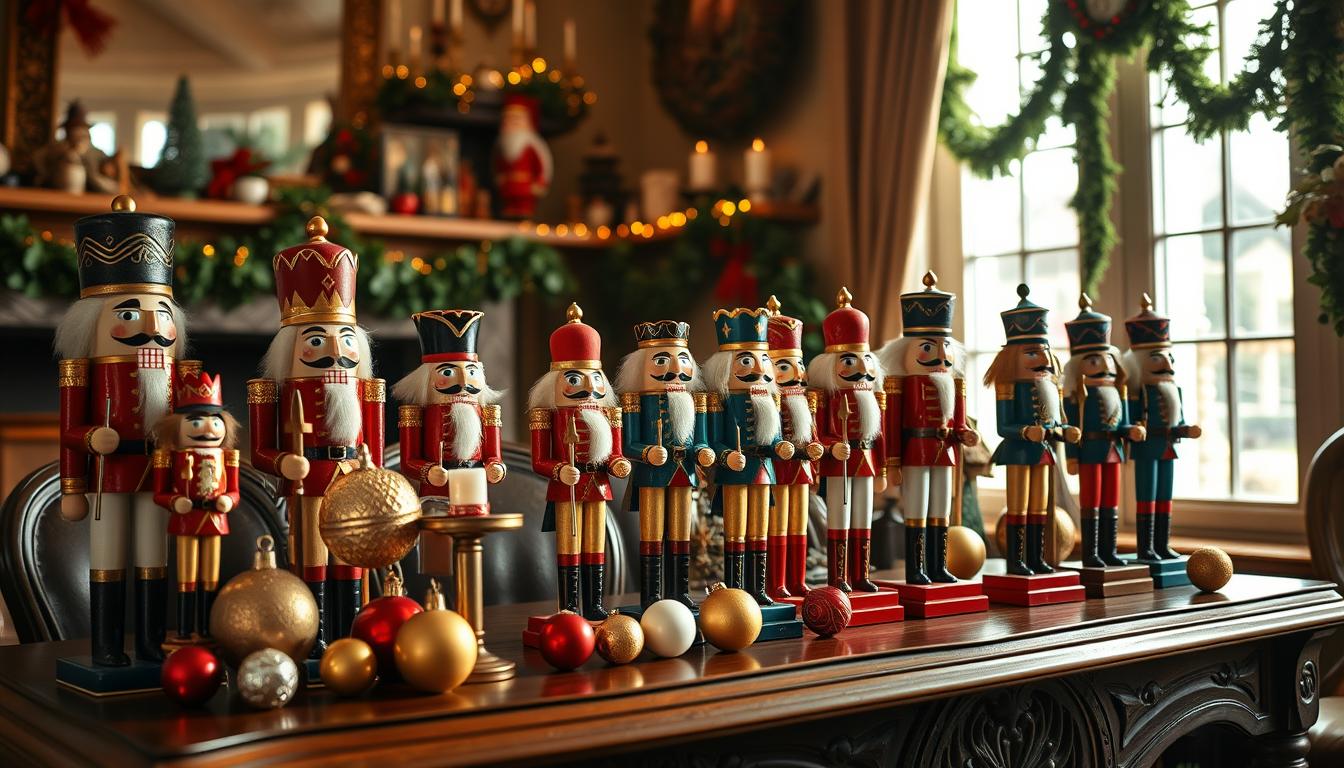
In the spirit of Christmas, I felt it only appropriate to acknowledge one of the most beloved symbols of Christmas, the Nutcracker. The journey of these wooden figures holds all the folklore and cultural exchange you might imagine.
Nutcrackers have recently found their place again in present-day Christmas decor with the trending Nostalgic Christmas Aesthetic. For me, nutcrackers have always had a place in holiday decor. My mother had a small collection from her travels to Europe as well as gifts from my father during his work trips to Germany.

Photo by Chris Briggs
When the nutcrackers were unpacked each year, is was a sure sign that Christmas was just around the corner. They were beautiful and I remember their faces always had a look of withholding some type of secret. A story.
Their transformation from simple tools to beloved Christmas decorations date back to the late 1600s in what is now Germany and Czechia. Many people today know them as colorful holiday decorations but their story begins with a much more practical purpose.
The History and Story Behind Nutcrackers: From Ancient Tools to German Craftsmanship
Long before they marched across our mantels in bright red coats, nutcrackers lived quiet, symbolic lives in the villages of the German Erzgebirge. Carved by hand from local wood, these small guardians were never meant to be toys—they were protectors.
The Emergence of German Nutcracker Craftsmanship in the Ore Mountains
The story takes an interesting turn in Germany’s Erzgebirge region. Miners turned to woodworking when mining declined in the 17th century.
This region became famous for its wooden craftsmanship. Local artisans began creating figures that could crack nuts. With whimsical exaggeration—square jaws, grand mustaches, and soldierly posture—they created figures that embodied authority figures of the time: kings, soldiers, policemen, even local officials.
A playful hint of rebellion hid within their design: villagers found joy in the idea of making these stern figures “work” for them by cracking tough winter nuts. This was a quiet form of rebellion. By placing a king or soldier in the kitchen to do the “menial work” of cracking hard nuts, the common people were having a little fun at the expense of the ruling class.
The phrase, “Hard nut to crack” is said to have come from this time as well.

German Christmas Market. Photo by MOON
The craftsmanship from areas like Seiffen in Saxony became renowned. There are tales of wealthy farmers offering rewards for effective solutions. This drove innovation in design and function.
Functional Purposes and Symbolic Meanings of Early Nutcrackers
Early versions served dual purposes at dessert time. They functionally cracked nuts while symbolically protecting homes.
By the 1700s, they began appearing as soldier figures. These strong figures were meant to guard households from bad energy and families believed they brought good luck and protection.
According to local folklore, a nutcracker’s stern expression wasn’t meant to scowl, but to ward off evil spirits and bring luck, strength, and prosperity to the home. They were thought to possess strength and power, standing as sentries to protect the family and baring their teeth to ward off evil spirits.
This symbolic meaning became as important as their practical use.
The Evolution of Nutcrackers into Decorative Figures
What I find so captivating is how these functional objects blossomed into artistic treasures. Their transformation represents one of the most fascinating journeys in decorative arts.

Photo by Tim Mossholder
From Functional Tools to Decorative Soldiers and Characters
The early 19th century marked a turning point in eastern Germany. Craftsmen in Sonneberg and Ezerberge regions created the first standing wooden soldier designs.
These weren’t just any soldiers. They reflected the cultural influences of their time. Napoleon’s occupation possibly inspired figures resembling French military personnel.
Wilhelm Fuchtner and the Commercial Production Era
1872 changed everything for these decorative pieces. Wilhelm Fuchtner began the first commercial production, making them accessible to more people.
His manufacturing approach maintained beautiful craftsmanship while increasing availability. The operation mechanism? A simple handle moved the jaw to crack nuts.
This blend of function and beauty captured hearts across Europe. Fuchtner’s work truly brought these decorations into homes worldwide.
Different Styles and Regional Variations of Nutcracker Figures
The regional diversity of these pieces spanned across Europe. Saxony and Sonneberg embraced them as popular decorations by 1800.
Dresden market records show sales as early as 1786. But the variations went far beyond soldiers.

Photo by Ilona Frey
Artisans created brass crocodiles, cast-iron squirrels, and detailed dogs. Each region developed its unique style and cultural significance.
This creative explosion transformed practical tools into cherished decorative items. Their spread across Germany and Europe through the 1800s cemented their status as artistic treasures.
The Literary and Ballet Connections That Shaped Nutcracker Popularity
Storytelling and performance have elevated the humble nutcracker from a simple wooden figure to a global cultural icon. Its evolution—from a folk carving to a character brought to life through music, dance, and imagination—remains one of the most fascinating artistic transformations.
The birth of the Nutcracker in ballet became one of the most iconic and time honored traditions during the holiday season. I know ballet isn’t everyone’s cup of tea but you can’t deny the popularity and beauty that the production delivers.
E.T.A. Hoffmann’s Original “The Nutcracker and the Mouse King”
Before the Nutcracker story as we know it, E.T.A. Hoffmann published his groundbreaking story in 1816. This literary work provided the foundation for everything that followed.
The original tale was surprisingly dark and intense. It featured magical toys coming to life on Christmas Eve. A nutcracker doll led the battle against a mouse army in a fantastic conflict.
Hoffmann’s narrative gave meaning to their distinctive features.
“The tale blended fantasy and reality in ways that captivated readers across Europe.”
Tchaikovsky’s Ballet Adaptation and Its Journey to Popularity
French author Alexandre Dumas created a softer adaptation in 1844. This version paved the way for the famous ballet production.
Tchaikovsky and Marius Petipa collaborated on the ballet version in 1892. They made significant changes to the original story.
The main character’s name changed from Marie to Clara. They added the Sugar Plum Fairy character who wasn’t in Hoffmann’s work.
I found the military references particularly interesting. “Sugar plums” was actually slang for cannon balls used by the mouse army.
The first performance in Saint Petersburg received mixed reactions. Audiences loved Tchaikovsky’s beautiful music but found the production confusing.
How the Ballet Transformed Nutcrackers into Christmas Icons
Though the ballet wasn’t an instant success in Russia, its American revival in the 1940s transformed the humble nutcracker into a global Christmas icon.
Suddenly, the wooden figure wasn’t just a guardian—it became a character, a hero, a symbol of magic and imagination. 1934 revised version marked a turning point for the ballet’s popularity. That same year saw the first full performance outside Russia in England.
The real American breakthrough came on Christmas Eve 1944. The San Francisco Ballet’s performance was so successful it became an annual tradition.
New York Ballet’s 1954 production cemented the work’s status as a Christmas classic. The ballet transformed these figures into holiday icons across the United States.
Today, the performance has become a beloved Christmas event worldwide. This annual tradition continues to introduce new generations to these magical characters.
- Global recognition through ballet productions
- Annual traditions that began in the 1940s
- Cultural transformation from tool to symbol
- Artistic collaboration across different mediums
Find your Authentic Nutcracker
Seeking out an authentic nutcracker can seem tricky but it doesn’t have to be. you can find the real deal at the following sites:
At Lifelong Collectibles you can find German Nutcrackers by Christian Ulbricht, Steinbach, Seiffener, KWO & Mueller
Of course, there’s no better place to find an authentic nutcracker than go to the source; the famous German Christmas markets will have unlimited supply of the most beautiful nutcrackers. You’ll want to head to the Nuremberg Christkindlesmarkt, the Dresden Striezelmarkt, the Cologne Cathedral Market, and the Munich Christkindlmarket (especially Marienplatz), where you’ll find traditional wooden crafts and specialized shops like Käthe Wohlfahrt, with the Ore Mountains region (Erzgebirge) being the heartland for high-quality nutcracker makers like Steinbach.
The Remarkable Global Journey of the Nutcrackers
I’m truly inspired by how these figures achieved worldwide recognition. American soldiers returning from Germany introduced them to the US after World War II. Their arrival coincided perfectly with the ballet’s growing popularity.
This created a powerful cultural combination that established them as Christmas icons. Generations now pass them down as symbols of protection and holiday cheer.
I appreciate that authentic German craftsmanship involves 60+ handmade pieces. The “Echt Erzgebirge-Holzkunst mit Herz” trademark ensures genuine quality. Purchasing these supports traditional woodworking artisanship.
It’s so special to think that as we display them in our homes, we participate in a tradition spanning continents and countless celebrations.

Today’s nutcrackers wear every outfit imaginable—from classic military coats to whimsical seasonal costumes—but their essence remains unchanged. They stand tall, steadfast, and slightly whimsical, bridging the gap between folklore and modern tradition. To display a nutcracker isn’t just to decorate—it’s to honor a story centuries old, a lineage of craftsmanship, artistry, protection, and holiday storytelling.
From the Erzgebirge mountains to Tchaikovsky’s stage, the nutcracker’s journey is a reminder that the things we treasure most often begin as the simplest handmade objects—shaped by culture, carried by imagination, and kept alive through the rituals we return to year after year.







Leave a Reply